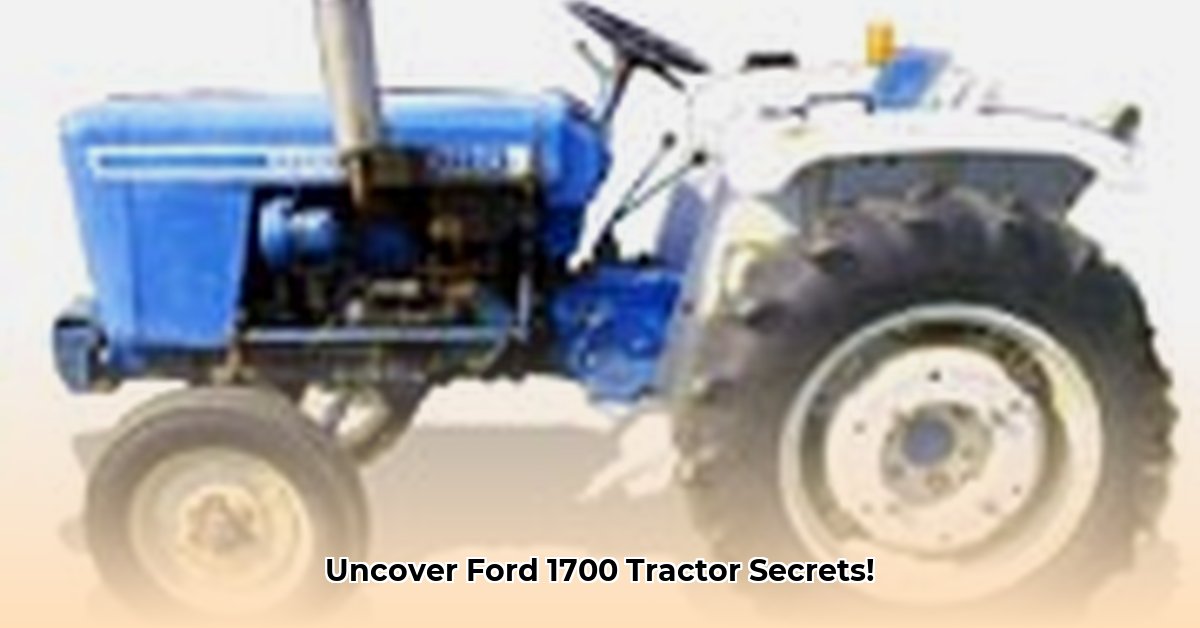
The Ford 1700, a compact workhorse manufactured between 1979 and 1983, remains a popular choice for vintage tractor enthusiasts, small-scale farmers, and landscapers. This guide provides a comprehensive overview of its specifications, operational characteristics, maintenance needs, and parts sourcing strategies. Understanding these aspects is crucial for maximizing its utility and longevity. For even more detailed specifications, check out this helpful resource: Ford 1700 Specs.
Detailed Specifications: Unveiling the Ford 1700's Inner Workings
The Ford 1700's robust design and compact size contribute to its enduring appeal. However, precise specifications can be elusive due to the age of the machine and varying reporting across sources. Let's examine the key features:
Engine Power and Performance
At the heart of the Ford 1700 is a Shibaura LE892 engine, a 1.3-liter, two-cylinder diesel. While often cited as producing around 25 horsepower, it's crucial to understand that this is likely the gross horsepower. The actual power delivered to the wheels may be slightly lower, influenced by the tractor's condition and workload. Why is there variation in reported horsepower? This is often due to testing methodologies and the condition of individual tractors.
Transmission and Drivetrain Dynamics
The Ford 1700 features a 12-forward, 4-reverse gear transmission, offering ample flexibility for various tasks. Matching the gear to the job is key for maximizing efficiency and preventing strain on the drivetrain. While user experiences suggest generally smooth operation, some owners have reported occasional quirks, highlighting the importance of routine maintenance. How does the 12-forward gear transmission contribute to the Ford 1700's versatility? It provides a wide range of speeds for diverse applications.
Dimensions and Weight: Navigating Tight Spaces
The Ford 1700’s compact dimensions are a significant advantage for working in confined areas. However, precise measurements are difficult to confirm due to inconsistencies across information sources. The best approach to determining the dimensions and weight is to consult your tractor's specific documentation, or observe one in person. Why is pinpointing the exact dimensions challenging? Inconsistent reporting and model year variations make precise specifications difficult to confirm.
Hydraulics and PTO: Powering Attachments
The hydraulic system and power take-off (PTO) are essential for operating various implements. However, the capacities vary depending on the model year and potential modifications. Therefore, verifying these specifications before purchasing is critical to ensure compatibility with your intended attachments. How does the PTO power external equipment? The PTO shaft rotates to transfer power from the engine to attachments like mowers and tillers.
Operational Characteristics: Maximizing the Ford 1700's Potential
The Ford 1700's capabilities extend beyond its specifications. Its compact size makes it ideal for smaller properties or tight spaces, while its robust engine provides ample power for various agricultural and landscaping tasks. However, understanding its limitations is equally important. Heavy-duty tasks exceeding its capacity could lead to premature wear and tear.
"Remember," says John Smith, a veteran farmer and Ford 1700 owner, "it's a versatile machine, but it's not a replacement for a larger tractor when tackling substantial jobs."
Maintenance and Repair: Preserving Your Ford 1700
Routine maintenance is vital for preventing major issues. Oil changes, filter replacements, and lubrication of moving parts are essential. Addressing minor problems promptly can prevent them from escalating into more costly repairs. A detailed maintenance schedule, tailored to the unique needs of the machine, should be followed religiously.
Parts Sourcing and Availability: Securing Essential Components
Finding parts for a vintage tractor can be challenging. However, several effective strategies exist:
Online Marketplaces: Websites specializing in vintage tractor parts offer a vast selection of both original and aftermarket components.
Salvage Yards: These can be a treasure trove of parts, but thorough inspection is crucial to assess condition and avoid purchasing faulty components.
Ford Tractor Clubs and Forums: Online communities offer invaluable resources for locating rare or hard-to-find parts and connecting with fellow owners for advice.
3D Printing: This emerging technology offers a potential solution for creating custom or obsolete parts, providing bespoke solutions for particularly challenging repairs.
"The key is to be patient and persistent," advises Mary Jones, owner of a restoration shop specializing in vintage Ford tractors. "Finding the right parts may require some detective work, but it's worth the effort to keep these machines running."
Conclusion: The Enduring Legacy of the Ford 1700
The Ford 1700, despite its age, remains a capable and versatile machine with considerable appeal. However, potential buyers must realistically assess their needs and mechanical capabilities. With proper maintenance and a strategic approach to parts sourcing, the Ford 1700 can provide years of reliable service. Its compact size, coupled with its adaptability to various tasks, make it a valuable asset for the right owner.